The Integrated Global Creative Economy
-
City/Place:
Brooklyn, New York
-
Country:
United States
-
Name:
Cory Henry
-
Outgoing Curation by:
Augmented Matrix
-
Management/Booking:
Management
Culture Collective
Jonathan Azu & Zeek Elliott
Booking
United Talent Agency
Jesse Rossoff & Noah Simon
-
Email:
coryhenry@cultureco.co
-
Bio:
“The human voice is so powerful,” says Cory Henry. “When I’m singing, it’s like this extra way of connecting and communicating with people beyond what I can do just playing the organ. I’m able to convey these messages that are really important and meaningful to me through my words. Being front and center like this every night, it’s a challenge, but I’m up for it.”
On his latest debut album with The Funk Apostles, ‘Art of Love,’ organ virtuoso Cory Henry demonstrates that he's more than up for the challenge, moving from sideman to frontman with seemingly effortless grace and cool. Praised by AllMusic as “one of the finest Hammond B-3 organ players of his generation,” Henry also proves himself to be a remarkable singer and songwriter here, one of extraordinary depth and vision. He and the band whip up an intoxicating blend of blues, soul, R&B, Afrobeat, gospel, and jazz on the record, blurring genres and upending expectations at every turn. Simultaneously futuristic and retro, experimental and classic, it’s the sound of one of modern music’s most inventive minds coming fully into his own as a bandleader and storyteller.
A Brooklyn native, Henry may be best known for his role in Snarky Puppy, the instrumental jazz-pop orchestra hailed by Rolling Stone as “one of the more versatile groups on the planet right now.” He’s won a pair of GRAMMY Awards for his work with the band since 2012, but Henry’s deft keyboard skills have been blowing minds around the world for more than two decades now. At six, he made his debut at Harlem’s legendary Apollo Theater, and at nineteen, he joined the touring band of jazz icon Kenny Garrett. Since then, he’s toured or recorded with everyone from Bruce Springsteen and The Roots to P. Diddy and Yolanda Adams in addition to cracking the Top 10 on Billboard’s Jazz charts with a pair of solo albums. NPR called him “a master” and said his “musical charisma is a match for a nearly 400 pound organ,” while Keyboard Magazine dubbed his playing “soulful, church-y, playful, restrained, and virtuosic,” and The Boston Globe raved that “if anyone’s going to preach the gospel of the Hammond organ, it should be Cory Henry.”
The gospel, in fact, is where it all began for Henry. He grew up performing and singing in church (a recent documentary titled ‘Gotcha Now’ features incredible footage of him tearing up the organ there at the age of four), but he refrained from sharing his voice with the world outside those holy halls for many years.
“I just didn’t think my voice was good enough,” he confesses. “I didn’t think anyone else would want to hear it. But now that I’ve overcome my fear of singing, I’ve gotten comfortable with my voice, and it’s become just like another instrument for me.”
Henry’s vocals on the album are smooth and breathy, with an intimate delivery that’s alternately understated and ecstatic. While his keyboard playing often draws comparisons to Oscar Peterson and Herbie Hancock, Henry’s singing reveals a whole different side of his musical personality, one that synthesizes everything from Michael Jackson and Marvin Gaye to Stevie Wonder and Prince.
“Every influence that I could think of growing up is in this record,” reflects Henry. “I’m trying to break the barriers. The word funk is in our name, but I want people to know that this band is bigger musically than any one genre.”
Henry pieced together The Funk Apostles’ lineup out of players he met on the road over the years, and each member of the band is an all-star in their own right. Guitarist Adam Agati, who co-wrote the album’s lyrics with Henry, has worked with everyone from Booker T. Jones to Ludacris, while bassist Sharay Reed has performed with Patti LaBelle, Aretha Franklin, Chakha Khan, and more. Henry met drummer TaRon Lockett while he was playing with Snarky Puppy, but he’s performed with some of the biggest names in R&B including Erykah Badu and Montell Jordan, and keyboardist Nick Semrad’s credits include Miss Lauryn Hill, Bilal, and Gabriel Garzon-Montano.
Recorded in Williamsburg, Brooklyn, ‘Art Of Love’ was tracked live to tape in an effort both to capture the inimitable energy of the band’s live shows and to channel the warm analog vibes of the 1970’s. While Henry may be renowned for his gifts as an improviser, the album serves as a showcase for his skills as a songwriter and producer, rich with intricate arrangements and memorable hooks. That’s not to say it’s without spontaneity, though. The band worked with minimal rehearsal (Henry estimates they’ve had three in the two years since the band started playing together), and several tracks are actually first-take recordings.
The driving, funky “In The Water,” combines a relentlessly pulse-pounding rhythm section groove with swirling synthesizer underneath Henry’s insistent, charismatic vocals. Like much of the album, the song is an examination of love: what it means, what it takes, what makes it last. On lead single “Trade It All,” he offers up a vulnerable, honest account of the sacrifices he’d make for a lover, while the sensual and smooth “Just A Word” sets a sultry mood for romance, and the fluid, elegant “Our Affairs” finds him asking, “Babe tell me why / You put me through Hell when Heaven’s where true love resides?”
As a writer, Henry is clearly interested in love beyond just the romantic sense of the word, though, often zooming out to take a big picture look at a world that seems to be sorely lacking in it. “Find A Way” is an anthem to making life better through compassion and empathy, frequent show-closer “Give Me A Sign” is a blues and gospel-tinged love letter to music itself, and the punchy “Takes All Time” is Henry’s true-life account of his journey to manhood, his “testimony to love and not rushing to find it.”
The album ends on a more political note with “Free,” a gritty tune inspired by current events that features Henry’s most impassioned vocal performance yet as he promises, “we gonna fight / live or die for our rights / everywhere.”
“I want to make music that really means something,” he explains. “I think of the 60’s and 70’s as this golden era of music, and if you look at some of the top artists then like Curtis Mayfield and Stevie Wonder, they were singing about what was happening around them in this creative way that made people want to act. They used music as a tool to reach the world and bring about change to help make it a better place. I want to do that, too.”
It’s an ambitious goal, to be sure, but if there’s one thing this album proves, it’s that Cory Henry is up for the challenge.
Clips (more may be added)
I (Sparrow) built this artifact in my record shop in Salvador da Bahia, Brazil, where I am below left with David Dye and Kim Junod for U.S. National Public Radio. The interview is online at NPR's Roots of Samba.
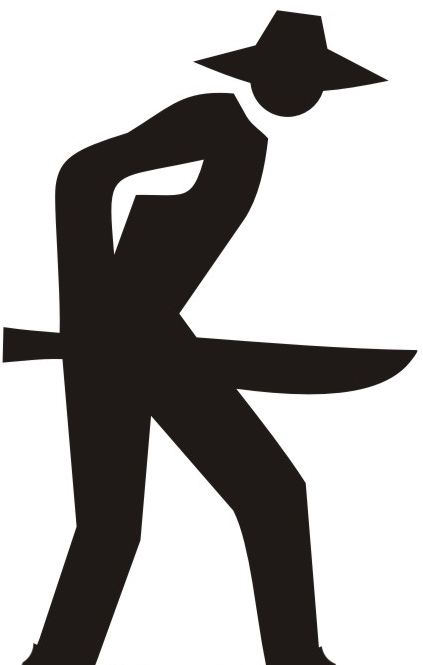
The sugarcane cutter above, machete in hand, represents the fact that the great root of Brazil's music is buried deep within the soil of the sugarcane plantations of Bahia, music that was impetus for both shop and matrix. The cutter was designed by Professor of Design Walter Mariano at the Federal University of Bahia and it was our shop logo. Now it serves as logo for a labyrinthine network of pathways encircling the earth like the interlaced arboreal canopy of a rainforest tree rooted in Bahia but expanding to encompass the planet.
I opened the shop in Salvador, Bahia in 2005 in order to create an outlet to the wider world for magisterial Brazilians. Our matrix "radio" — built around musicians in the matrix and featured by The Guardian in 10 Best Music Radio Stations Around the World — was set up and organized on the laptop barely visible there behind me (as was this network).
Kareem Abdul-Jabbar found us (he's a huge jazz fan), David Byrne, Oscar Castro-Neves... Spike Lee walked past the place while I was sitting on the stoop across the street drinking beer and listening to samba from the speaker in the window...
But we weren't exactly easy for the world-at-large to get to. So in order to extend the place's ethos I transformed the site associated with it — The Online Guide to the Soul of Salvador da Bahia, Brazil — into a network wherein Brazilian musicians I knew would recommend other Brazilian musicians, who would recommend others...
And as I anticipated, the chalky hand of God-as-mathematician intervened: In human society — per the small-world phenomenon — most of the billions of us on earth are within some 6 or fewer degrees of each other. Likewise, within a network of interlinked artists as I've described above, most of these artists will in the same manner be at most a handful of steps away from each other.
So then, all that's necessary to put the Brazilians within possible purview of the wide wide world is to include them among a wide wide range of artists around that world.
When Britain's premier cellist Julian Lloyd Weber (for example) is inside the matrix, then anybody on his page — whether they be accessing from a campus in L.A., a pub in Dublin, a shebeen in Cape Town, a tent in Mongolia — is within close, transitable, discoverable steps of (for example) Raimundo Sodré, even if they know nothing of Brazil and are unaware that Sodré sings/dances upon this planet. Sodré, having been knocked from the perch of fame and ground into anonymity by Brazil's dictatorship, has now the alternative of access to the world-at-large via recourse to the vast potential of network theory.
...to the degree that other artists et al — writers, researchers, filmmakers, painters, choreographers...everywhere — do also.
sparrowroberts@matrixonline.net
Years ago in NYC I "rescued" unpaid royalties (performance & mechanical) for artists/composers including Aretha Franklin, Barbra Streisand, Mongo Santamaria, Ray Barretto, Gilberto Gil, Astrud Gilberto, Airto Moreira, Jim Hall, Robb Royer of Bread, Cat Stevens (now Yusuf Islam), Clement "Coxsone" Dodd (for his rights in Bob Marley compositions; Clement was Bob's first producer), Led Zeppelin, Philip Glass, Richie Havens and many others. Aretha called me out of the blue vis-à-vis money owed by Atlantic Records. Allen Klein (managed The Beatles, The Rolling Stones, Ray Charles) called about money due the estate of Sam Cooke. Jerry Ragovoy (Time Is On My Side, Piece of My Heart) called just to see if he had any unpaid money floating around out there (the royalty world was a shark-filled jungle, to mangle metaphors, and I doubt it's changed).
But the pertinent client (and friend) in the present context is Earl "Speedo" Carroll, of The Cadillacs. Earl went from doo-wopping on Harlem streetcorners to chart-topping success to working as a custodian at PS 87 elementary school on the west side of Manhattan. Through all of this he never lost what made him great.
Greatness and fame are too often conflated. The former should be accessible independently of the latter.
 Alicia Svigals (NEW YORK CITY): Apotheosis of klezmer violinists (musical tradition of the Ashkenazi Jews of Central and Eastern Europe)
"Thanks, this is a brilliant idea!!"
 Julian Lloyd Webber (LONDON): Premier cellist in UK; brother of Andrew (Evita, Jesus Christ Superstar, Cats, Phantom of the Opera...)
"Dear Sparrow, Many thanks for this – I am touched!"
 Susan Rogers (BOSTON): Director of the Berklee Music Perception and Cognition Laboratory ... Former personal recording engineer for Prince: "Purple Rain", "Sign o' the Times", "Around the World in a Day"
"Dear Sparrow: I am thrilled to receive your email! Thank you for including me in this wonderful matrix."
 Kamasi Washington (LOS ANGELES): Saxophone giant
"We appreciate you including Kamasi in the matrix, Sparrow. (Banch Abegaze, manager)"
 Nduduzo Makhathini (JOHANNESBURG): piano, Blue Note recording artist
"I'm truly thankful ... Sohlangana ngokuzayo :)"
 Clarice Assad (RIO DE JANEIRO/CHICAGO): Pianist and composer with works performed by Yo Yo Ma and orchestras around the world
"This is super impressive work ! Congratulations ! Thanks for including me :)))"
 Randy Brecker (NEW YORK CITY): Trumpet giant
"Thanks! It looks great!....I didn't write 'Cantaloupe Island' though...Herbie Hancock did! Great Page though, well done! best, Randy"
 Matt Garrison (BROOKLYN, NY): Son of Jimmy Garrison (bass for John Coltrane, Bill Evans...); plays with Herbie Hancock and other greats...
"Very nice! Thank you for this. Warmest regards and wishing much success for the project! Matt"
 El Aleph
Our use of an aleph was inspired in Jorge Luis Borges' mind-bending short story "El Aleph" and its inspiration in the aleph-denoted mathematics of the infinite, the Aleph rendering the entire universe perceivable. The Matrix mission with respect to human artistry in our time (the creative universe), is, so far as possible, likewise.
In a small world all is closer than we imagine.
The Integrated Global Creative Economy
Algorithms and AI not required. Real intelligence, yes.
"What has been will be again, what has been done will be done again, for there is nothing new under the sun."
The small-world phenomenon exists apart from humanity's conception of it.
The utilization of it, however, to position mankind's artists/creators in accessible reach of each other and everybody, is new.
Curation has existed for millennia.
Universal curation, however, is new.
Both of these new-to-the-world concepts originated in Cana Brava Records in Salvador da Bahia, Brazil.
Putting them together in order to accomplish something which has now become the almost exclusive reserve of artificial intelligence, began in Cana Brava Records as well.
With profound respects to Ecclesiastes, something new which cannot be twisted to evil ends has been conceived and constructed under the bright Brazilian sun.
And with respects to Miranda and her author, this truly is a brave new, small world.